Tao and Guqin
Seven strings for modernization, It was only five in the ancient times , hollow wood; one pluck joins Grand Clarity. Notes blend dragon-tiger, water-fire. Breath returns, string hums like elixir. Silence: heart alone, ancient-still.
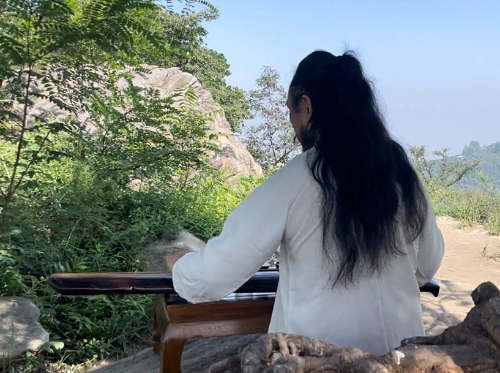
In traditional Chinese cosmology, the guqin’s five tones—Gong, Shang, Jiao, Zhi, Yu—are far more than musical notes. They form a holographic code linking the human body, nature, and the cosmos, turning each performance into a dialogue with the universe.
Cosmic Rhythms in Sound
The five tones emerged from ancient observations of cosmic order. Derived from the "thirds method" in Guanzi, they mirror the waxing and waning of yin and yang. Gong, deep and steady, corresponds to earth’s nurturing power; Shang, crisp and sharp, reflects metal’s autumnal收敛; Jiao, vibrant and fresh, embodies wood’s springtime growth; Zhi, bright and warm, symbolizes fire’s summer vitality; Yu, low and resonant, represents water’s winter dormancy.
Aligned with the five elements and four seasons, the tones create a sonic cycle of cosmic energy. Gong (earth) anchors the center; Shang (metal) rules the west and autumn; Jiao (wood) governs the east and spring; Zhi (fire) presides over the south and summer; Yu (water) dominates the north and winter. As they flow, they echo the universe’s eternal rhythm of growth, decay, and renewal.
"Resonance Between Body and Cosmos"
Ancient wisdom holds the human body as a microcosm of the universe, with each tone corresponding to an organ and emotion. Gong nourishes the spleen, easing overthinking; Shang clears the lung, dispelling sorrow; Jiao soothes the liver, relieving anger; Zhi invigorates the heart, calming restlessness; Yu replenishes the kidney, easing fear.
When played, guqin tones resonate with the body’s meridians. Yangchun Baixue’s lively Jiao tones, like spring rain, relax stagnant liver qi. Dialogue between Fisherman and Woodcutter’s steady Gong rhythms, like earth’s embrace, quiet anxious thoughts. This resonance harmonizes body, mind, and universe, achieving the Taoist ideal of "unity of man and nature."

Cosmic Philosophy in Melody
Guqin pieces use the five tones to paint cosmic landscapes and explore life’s mysteries. High Mountain and Flowing Water uses Gong’s depth to depict mountains and Yu’s fluidity to capture rivers, immersing listeners in nature’s grandeur. Wild Geese Descending on the Sandbar blends Jiao’s vitality and Shang’s crispness to evoke the vastness of the frontier and the grace of migrating geese.
Beyond scenery, pieces delve into philosophy. Guangling San’s passionate Zhi tones and somber Yu notes tell of Nie Zheng’s heroic assassination, prompting reflection on justice and fate. Three Variations of Plum Blossom cycles through Jiao’s resilience and Gong’s steadiness, symbolizing life’s eternal renewal through winter’s trials.
The guqin’s five tones are a sonic map of the universe, weaving together cosmic rhythms, human physiology, and spiritual insight. In today’s fast-paced world, they offer a path back to nature, inviting us to touch the universe’s pulse and find peace in its eternal harmony. .