Tao de Ching
The Tao Te Ching serves as the foundational theoretical pillar of Religious Daoism (Daojiao), revered as its supreme scripture. Laozi, its attributed author, was deified by Daoists as "Taishang Laojun," the highest deity. While the text originally presented philosophical concepts about the "Tao" (Way) and natural living, Religious Daoism transformed these ideas into a theological framework.
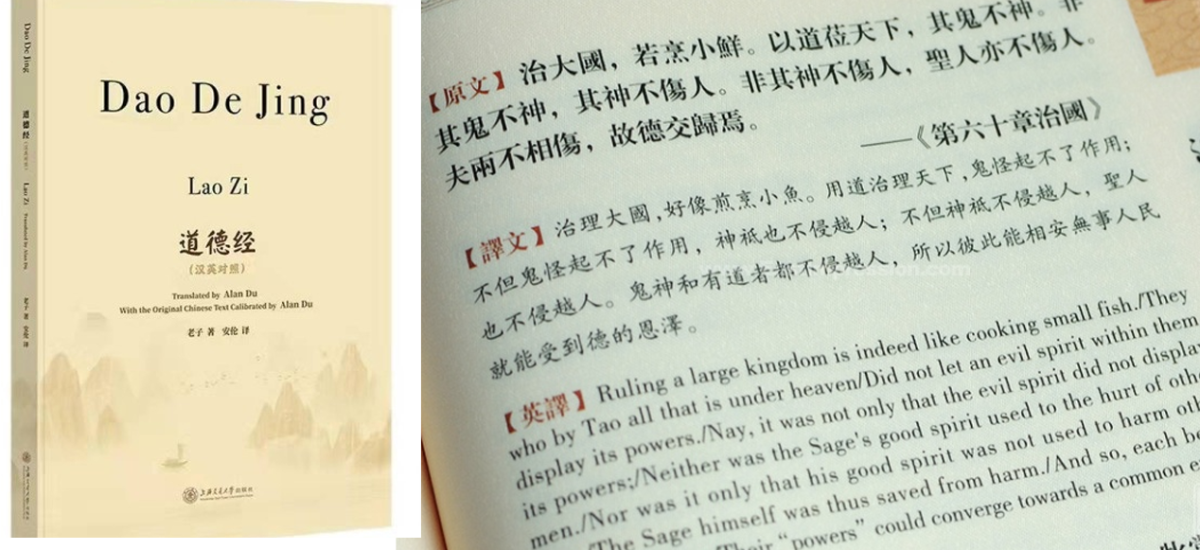
Written by Laozi in the Spring and Autumn Period, the 5,000-character Tao Te Ching is the foundational text of Taoist thought. Split into 37 chapters of Tao Jing (Book of the Way) and 44 chapters of De Jing (Book of Virtue), it stands as the unshakable ideological root and spiritual origin of Taoism, building the first complete Taoist philosophical framework centered on "Tao".In terms of status, Tao Te Ching is both the core source of Taoist philosophy and the fundamental scripture of religious Taoism. All later Taoist thinkers, including Zhuangzi and Liezi, inherited its core ideas. After Taoism developed into a religion, the text was honored as the Classic of the Way and Virtue, with Laozi revered as the Supreme Lord Lao Jun.
"Out of Tao came the One. The One begot the Two. Two produced Three. Out of Three the multiplicity of beings flowed."
It has remained the core source of Taoist doctrine, running through the religion’s beliefs, practices and traditions.For its function, Tao Te Ching has far-reaching influence:
First, it shaped the core Taoist ideological system, putting forward key concepts such as "Tao gives birth to all things", "Tao follows nature" and "governing by non-action", which established Taoism’s basic perspective on the universe, society and life.
Second, it connected Taoist theory to real-world practice: the idea of "governing by non-action" guided the Huang-Lao governance in the early Han Dynasty, contributing to the prosperous "Rule of Wen and Jing" and providing vital ideological resources for traditional Chinese statecraft.
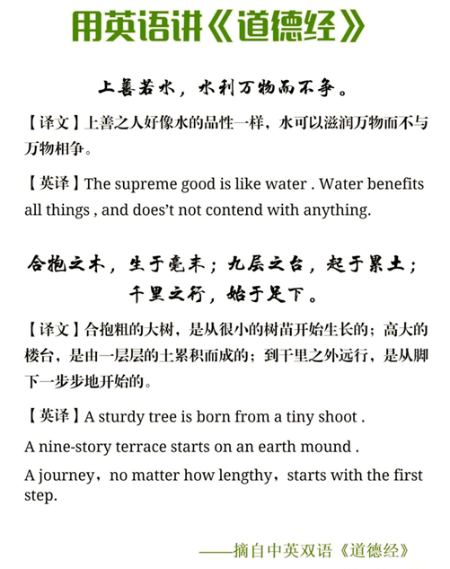
Third, it nurtured Taoism’s unique dialectical thinking and life wisdom: concepts like "the weak overcomes the strong", "fortune and misfortune are interdependent" and "the highest goodness is like water" shaped Taoism’s inclusive character, and have become part of Chinese cultural identity, guiding people in daily life. Finally, as the most widely translated and circulated Chinese classic globally, it has brought Taoist wisdom to the world, making it a shared cultural treasure for all humankind.
In short, Tao Te Ching is the soul and root of Taoism. Without it, Taoism would not have its 2,000 years of inheritance and development. It is both the starting point of Taoist thought and the endless source of Taoist wisdom
About
Taoist Stuff from Wu dang, 100% Totally handmade. Taichi uniform, instruments, books and much more. Enjoy to explore here and for more details just contact with WhatsApp. Thank you so much.